All posts by CPTFadmin

Everything You Need To Know About The New Weight Loss Drugs

Jenny Niwa


You have probably heard about several very popular new weight loss drugs, such as Wegovy, Ozempic, Mounjaro, and Zepbound.  Although Ozempic and Mounjaro are specifically approved by FDA for treating diabetes and not for weight loss, all four are being used by people who want to lose weight. Before you decide whether to take these drugs, here are some things you should know.

What are these drugs and how do they work?

The FDA approved Ozempic in 2017 for the treatment of type 2 diabetes and Wegovy in 2021 for weight loss for adults with obesity or who are overweight and have at least one weight-related health condition.  Although these drugs have been on the market for several years, their popularity really exploded in 2023. Mounjaro was approved in the spring of 2022 for Type 2 diabetes and Zepbound was approved in late 2023 for those with obesity or who are overweight with an additional chronic condition such as hypertension. While Ozempic and Mounjaro are not approved specifically for weight loss, doctors may prescribe them anyway – that’s called prescribing it off-label. All four curb hunger and reduce the intake of food. The medications are currently administered by injection once a week, but they may soon be available in pill form.

Both Wegovy and Ozempic  are made of semaglutide. Mounjaro and Zepbound are made of tirzepatide.  Both mimic the GLP-1 hormone, which is made naturally by the body. GLP-1  does 2 things: 1) It One is to slow the passage of food through the stomach, which helps people feel fuller longer; and 2) it promotes insulin release and helping reduce blood sugar.

What do research studies say? 

In August 2023, Wegovy’s maker, Novo Nordisk, claimed in a press release that the drug reduced the risk of serious heart problems. The company described a randomized trial of 17,500 patients with obesity and heart disease, although patients with diabetes were excluded.[2] Half of the participants received regular injections of Wegovy and the other half received a placebo. Rather than publish the results in a peer-reviewed journal, Novo Nordisk publicized their research in a press release that claimed that Wegovy reduced heart attacks, strokes, and deaths by 20% compared to placebo, and this was widely reported in the media. However, this statistic is misleading because it is a relative risk. When the study was finally published in the New England Journal of Medicine on November 11, 2023, the results did not sound as impressive:  8% of the people in the placebo group had had a nonfatal stroke or heart attack or died due to cardiovascular causes, compared to 6.5 percent in the Wegovy group[3] That decrease from 8% to 6.5% is a 20% decrease, but the difference is only 1.5% for patients considering whether it is a meaningful difference for them.

In August 2023, a study published in the New England Journal of Medicine found that the medication reduced the risk of heart problems for diabetes patients who were at high risk for cardiovascular complications. [4] This study included more than 3,000 patients with type 2 diabetes, who were randomly assigned to receive once-weekly Ozempic or a placebo for 2 years. Results showed that 108 of 1648 patients (6.6%) taking Ozempic either died, had a nonfatal heart attack, or nonfatal stroke, compared to 146 of 1649 patients (8.9%) who took the placebo.  This was statistically significant (which means it did not occur by chance), but is a difference of only 2.3%.

Mounjaro has been found to reduce blood pressure, which could improve health, but no published studies have provided evidence that it reduces heart disease.

What are the side effects?

The most common side effects of these GLP-1 medications include stomach issues such as nausea and diarrhea. Some patients experienced persistent vomiting or cyclic vomiting syndrome and severe gastroparesis. Gastroparesis is stomach paralysis and occurs when there is a delay or stopping in food movement from the stomach to the small intestine.

Warnings about other possible serious side effects that are listed on the companies’ websites include inflammation of the pancreas, gallbladder problems, increased risk of low blood sugar, kidney problems, serious allergic reactions, change in vision for people with type 2 diabetes, increased heart rate, and depression and thoughts of suicide.[5]

In January 2024, a new FDA report listed potential links between the medications and extensive hair loss (called alopecia), a swallowing problem that can occur during surgery called aspiration, and thoughts of suicide.[14]  A few days later, the FDA announced that their preliminary review did not support an increase in thoughts of suicides among patients taking these drugs, but the FDA also said they had drawn no conclusions based on their preliminary findings and would continue to review new data.

An even more serious side effect is the risk of thyroid cancer. According to a study conducted by the European Medicines Agency (EMA, which is the European version of the FDA), researchers found that using GLP-1 medications for 1-3 years may increase the risk for all types of thyroid cancers.[6]

Concerns about aspiration and suicidal thoughts are not new. For example, in 2023 there were media reports about potential complications from anesthesia for people taking these drugs. The American Society of Anesthesiologists advises that people taking these drugs should make sure to stop taking the medication a week before surgery. People who know they are going to have surgery are advised not to eat for 24 hours before surgery, but since these drugs affect how long food stays in the stomach, a 24-hour fast is not enough to prevent regurgitating food during the operation. This is dangerous because vomiting under anesthesia can cause pneumonia and other fatal problems due to the food and stomach acid getting into the lungs.[7]  This risk may be impossible to prevent if someone taking the drug requires emergency surgery.

What Happens if You Lose Weight and Want to Stop Taking the Drug?

Most weight loss strategies work for a limited time; when people stop dieting or exercising, they gain the weight back. Is the same true for the new weight loss drugs such as semaglutide and tirzepatide? Unfortunately, most patients take these drugs for less than 3 months and the number still taking the drug after 1 year is even lower. A study of more than 1,900 patients by researchers at the Cleveland Clinic found that patients’ use of semaglutide and several other weight loss medications dropped from 44% at 3 months to 33% at 6 months and just 19% at 12 months.[8]  Regardless of whether they stopped taking the drugs due to side effects, cost, or other reasons, the long-term benefits of these drugs are limited because when they stop taking the drugs, their stomach no longer feels full. A study conducted with almost 2,000 adults without diabetes found that one year after no longer taking Wegovy, participants regained two-thirds of their prior weight loss.[9]  

There is still much that is unknown about these drugs. It is unclear how these drugs affect patients after years of use, whether the drugs are effective at maintaining a certain weight after long-term use, and whether most patients will benefit from taking the drugs for a limited period of time or if they need to stay on for the rest of their lives. Current literature suggests that such medications may need to be taken life-long to experience long-term benefits and prevent any negative consequences that come from discontinuing use. [8]

Other Questions to Consider

In 2022, Novo Nordisk spent a total of $11 million to promote their Ozempic and other weight-loss drugs, including $9 million on meals and $2 million on travel for thousands of doctors to promote their weight-loss drugs.[10] That included more than 457,000 meals; nearly 12,000 prescribers had food paid for by the company more than a dozen times in that one year. Buying meals for doctors is not illegal, but this extreme level of “generosity” raises concerns. If these drugs are so effective, why did the company think it necessary to provide all these free meals?  And since the drugs became much more popular after the company spent all that money providing free meals to doctors, do you wonder if doctors are prescribing these drugs because they have they been unduly influenced to prescribe them?

Is taking these weight loss drugs right for you?

Ozempic is FDA approved for patients with type 2 diabetes and is not approved for weight loss. Due to the risk of thyroid cancer, if you or any family member has ever had a type of thyroid cancer, taking any of these 4 drugs may be dangerous. Similarly, if you have sensitivity to gastrointestinal problems, these drugs may not be right for you.

In January 2024, Eli Lilly, the maker of Mounjaro and Zepbound, warned against their use for cosmetic reasons. The company reminded physicians and patients that GLP-1 drugs are meant for serious diseases (obesity or Type 2 diabetes) and not for cosmetic weight loss. [15]

Another thing to consider is the cost, which is much higher in the U.S. compared to other countries.[11] If insurance does not cover the cost, one monthly dose of Ozempic costs about $900, and the cost for Wegovy is about $1,350 per month.[12],[13] The cost of Mounjaro is similar to Ozempic and Zepbound costs somewhat less than Wegovy. Since they are relatively new, there are no generic versions. You may be able to lower the costs of these drugs through savings programs or through coverage on your health insurance plan. Many private insurance providers cover these drugs to treat Type 2 diabetes. When used for weight-loss purposes, it is much less likely to be covered. Medicare does not cover these drugs, although patients, doctors, and Congress are pressuring Medicare to do so.

The media attention to these 4 drugs makes it seem that they are the only FDA-approved weight loss drugs. They are not. However, all weight loss drugs have unpleasant and potentially serious side effects, and these 4 seem to be more effective.

If you are eligible and interested in taking these drugs, you should first and foremost make sure to talk to your physician and discuss what to expect, the possible side effects, and your medical history. If you are not eligible for these drugs or are not interested in using them, there are other methods available that can help you lose weight and improve your health if you stick with them. These include exercising daily or regularly, developing healthier eating habits, and knowing when to eat.


[1] Hoffman, S. (2023) The Differences between Saxenda and Wegovy. Very Well Health. https://www.verywellhealth.com/the-differences-between-saxenda-and-wegovy-7564310

[2] Chen, E., and Joseph, A. (2023). Novo’s obesity drug Wegovy lowers cardiovascular risk by 20%, landmark trial finds. STAT+. https://www.statnews.com/2023/08/08/novo-nordisk-wegovy-cardiovascular-risk/

[3] Lincoff, A. M., Brown-Frandsen, K., Colhoun, H. M., Deanfield, J., Emerson, S. S., Esbjerg, S., Hardt-Lindberg, S., Hovingh, G. K., Kahn, S. E., Kushner, R. F., Lingvay, I., Oral, T. K., Michelsen, M. M., Plutzky, J., Tornøe, C. W., & Ryan, D. H. (2023). Semaglutide and Cardiovascular Outcomes in Obesity without Diabetes. New England Journal of Medicine. https://doi.org/10.1056/NEJMoa2307563

[4] Marso, S., Bain, S., Consoli, A., & Eliaschewitz, F. (2016). Semaglutide and Cardiovascular Outcomes in Patients with Type 2 Diabetes. The New England Journal of Medicine. https://www.nejm.org/doi/full/10.1056/nejmoa1607141

[5] Novo Nordisk. (n.d.). Tips for managing common side effects. https://www.wegovy.com/dashboard/my-library/week-02-tips-for-managing-common-side-effects.html#:~:text=thoughts%20of%20suicide.-,The%20most%20common%20side%20effects%20of%20Wegovy%C2%AE%20may%20include,runny%20nose%20or%20sore%20throat.

[6] Bezin, J., Gouverneur, A., Penichon, M., Mathieu, C., Garrel, R., Hillaire-Buys, D., Pariente, A., & Faillie, J.L. (2022). GLP-1 Receptor Agonists and the Risk of Thyroid Cancer. Diabetes Care. https://diabetesjournals.org/care/article-abstract/46/2/384/147888/GLP-1-Receptor-Agonists-and-the-Risk-of-Thyroid?redirectedFrom=fulltext

[7] Goodman, B. (2023). They took blockbuster drugs for weight loss and diabetes. Now their stomachs are paralyzed. CNN. https://www.cnn.com/2023/07/25/health/weight-loss-diabetes-drugs-gastroparesis/index.html

[8] Most Stop Taking Weight Loss Drugs Within 1 Year. (n.d.). Medscape. Retrieved December 12, 2023, from https://www.medscape.com/viewarticle/most-stop-taking-weight-loss-drugs-within-1-year-2023a1000uiq

[9] Wilding, J. P., Batterham, R. L., Davies, M., Van Gaal, L. F., Kandler, K., Konakli, K., Lingvay, I., McGowan, B. M., Oral, T. K., Rosenstock, J., Wadden, T. A., Wharton, S., Yokote, K., &  Kushner, R. F. (2022). Weight regain and cardiometabolic effects after withdrawal of semaglutide: The STEP 1 trial extension. Diabetes, Obesity and Metabolism, 24(8), 1553–1564. https://doi.org/10.1111/dom.14725

[10] Florko, N. (2023). Novo Nordisk bought prescribers over 450,000 meals and snacks to promote drugs like Ozempic. STAT+. https://www.statnews.com/2023/07/05/ozempic-rybelsus-novo-nordisk-meals-for-doctors/#:~:text=Novo%20Nordisk%20bought%20prescribers%20over,to%20promote%20drugs%20like%20Ozempic&text=WASHINGTON%20%E2%80%93%20Novo%20Nordisk%20spent,weight%20loss%2Dinducing%20diabetes%20drugs

[11] Amin, K., Telesford. I., Singh, R., & Cox, C. (2023). How do prices of drugs for weight loss in the US compare to peer nations’ prices? Health System Tracker. https://www.healthsystemtracker.org/brief/prices-of-drugs-for-weight-loss-in-the-us-and-peer-nations/?utm_campaign=morning_rounds&utm_medium=email&_hsmi=270760455&_hsenc=p2ANqtz-_P2SZN9DLjS_l7fSn8hrgS8xRf4YvJIonV0X-iRtKF3FtcWbgsMJd-K6tDV2u12XNFMEesDCulwlbdwkw74D1S-2WqXQ&utm_content=270760453&utm_source=hs_email#List%20prices%20of%20drugs%20used%20for%20weight%20loss%20in%20the%20U.S.%20and%20peer%20nations

[12] Wilson, A. (2023). How much does Ozempic cost without insurance?. RO. https://ro.co/weight-loss/ozempic-cost-without-insurance/

[13] Wilson, A. (2023). How much does Wegovy cost? RO. https://ro.co/weight-loss/wegovy-cost/

[14]  FDA Looking Into New Risks With Popular Weight-Loss Drugs. (n.d.). Retrieved January 9, 2024, from https://www.usnews.com/news/health-news/articles/2024-01-04/fda-looking-into-new-risks-with-popular-weight-loss-drugs

[15]  Open Letter Regarding the Use of Mounjaro® (tirzepatide) and ZepboundTM (tirzepatide) | Eli Lilly and Company. (n.d.). Retrieved January 12, 2024, from https://investor.lilly.com/news-releases/news-release-details/open-letter-regarding-use-mounjaror-tirzepatide-and-zepboundtm

Our Comments on the FDA Notice Regarding Changes to Third-Party Vendors for Risk Evaluation and Mitigation Strategies (REMS)

July 19, 2023


We are pleased to have the opportunity to share our views with the Food and Drug Administration (FDA) on their notice regarding Changes to Third-Party Vendors for Risk Evaluation and Mitigation Strategies (REMS).

We are a nonprofit think tank that conducts, analyzes, and scrutinizes research on a range of health issues, with a particular focus on which prevention strategies and treatments are most effective for which patients and consumers. We do not accept funding from companies that make products that are the subject of our work, so we have no conflicts of interest.

Implementing changes in REMS has the potential to cause significant disruptions in the operations of any REMS program, including the ability for prescribers and patients to interact with the tools necessary to fulfill the various REMS requirements. These disruptions can undermine patients’ ability to access a drug in ways that minimize risks. Since the FDA does not approve third-party REMS administrators, or play a major role in the initial development of REMS with elements to assure safe use (ETASU), it is essential that the FDA closely monitors any changes in REMS plans to make sure they are appropriate and yield beneficial outcomes.

We strongly urge that the FDA require drug sponsors and their REMS administrators to test proposed changes to REMS systems prior to implementation with those that actively engage with the system, including but not limited to physicians, patients, and pharmacists. This will ensure that the REMS program will have the intended impact. A less-than-rigorous approach to studying the efficacy of REMS defeats the purpose of REMS and fails to protect patients from predictable harm. The FDA REMS for Transmucosal immediate-release fentanyl (TIRF) drugs and the REMS for Extended Release/Long Acting (ER/LA) opioids provide important examples of how improper implementation of REMS can harm patients. The HHS IG found numerous failures for both these REMS programs, at a time when these REMS were especially important because of the opioid epidemic.1 For example, manufacturers consistently missed the REMS’ targets for training ER/LA prescribers, and the FDA was blamed for not giving manufacturers sufficient time to respond to FDA’s requests for better data before their next assessments were due. As a result, the REMS for ER/LA opioids was changed to primarily measure voluntary prescriber training to educate about risks, a decision that also failed to adequately protect patients.

We also strongly recommend that the sponsor and/or the REMS administrator conduct a Failure Modes and Effects Analysis (FMEA) to identify and plan for system failures. This includes providing for adequate support services in the event that the system fails to work as intended following full implementation of an altered REMS system. Part of the planning should include provisions for an emergency suspension of the REMS or specific parts of the REMS.

Additionally, beyond testing a REMS modification with stakeholders, FDA should require stakeholder input from prescribers in all stages of developing, implementing, and tracking a REMS modification related to changes to third party vendors. This will require greater transparency between drug sponsors, REMS administrators, and stakeholders.

In numerous REMS, the FDA has faced measurement challenges, such as a lack of baseline data and limited surveillance data. These metrics are essential for the sponsor to include when evaluating whether a REMS system was successfully and efficiently implemented. It is also essential to collect data on which types of health professionals are involved in implementing a specific REMS. For REMS that involve training of health professionals, there must be a record of the percentage of prescribers being trained, the percentage who start training who complete it, and what percentage that complete the training will answer training questions correctly.

Finally, we strongly recommend that all future REMS agreements that the FDA enters into with manufacturers and their vendors, require that deidentified REMS data be made available to appropriate outside stakeholders. The availability of this data will reassure the public, patients, and health care providers that each REMS is accomplishing its intended outcomes and promoting the safe use of drugs while minimizing harm, especially serious harm.

  1. U.S. Department of Health and Human Services Office of Inspector General. (2020). FDA’s Risk Evaluation and Mitigation Strategies: Uncertain Effectiveness in Addressing the Opioid Crisis. https://oig.hhs.gov/oei/reports/OEI-01-17-00510.pdf

Our Comments on the FDA’s Use of Generally Accepted Medical Knowledge Draft Guidance

July 24, 2023


We are pleased to have the opportunity to share our views with the Food and Drug Administration (FDA) on their Guidance: Generally Accepted Scientific Knowledge in Applications for Drug and Biological Products: Nonclinical Information.

We are a nonprofit think tank that conducts, analyzes, and scrutinizes research on a range of health issues, with a particular focus on which prevention strategies and treatments are most effective for which patients and consumers. We do not accept funding from companies that make products that are the subject of our work, so we have no conflicts of interest.

We support the efforts of the FDA to remain flexible and provide a more open application of scientific and regulatory judgment when conducting nonclinical studies that determine in vitro safety and efficacy. We recognize that this has the potential to streamline product development as well as avoid unnecessary animal testing, decrease costs, and hasten new drug approval time.  However, we predict that this will result in some sponsors providing insufficient data to show the safety, toxicology, and efficacy profile of a drug.

For that reason, we do not recommend using Generally Accepted Scientific Knowledge (GASK) as the sole source of nonclinical data in New Drug Applications (NDAs) or Biologic License Applications (BLAs). Instead, GASK should only be used to support sponsor data and should not replace the vital research that is needed to create a robust safety and efficacious drug profile.

Permitting GASK as the sole or primary evidence would often create a level of ambiguity regarding a drug’s true pharmacologic, distributive, and toxicologic effects. We support sponsor communication that is clear and data that are unequivocal, so that potential harms are minimized. We strongly encourage that the GASK used be: 1) long-standing, 2) uncontroversial, and 3) scientifically robust.  However, we note that even when the generally accepted scientific knowledge being relied upon is uncontroversial, long-standing, and scientifically robust, the external application of that information by the sponsor may be inappropriate. For example, even when a drug’s mechanism of action or the biologic pathway that a drug acts on is well understood, the drug should still be tested to assure that there are no downstream or unanticipated effects when in vitro to the full extent possible, and not solely rely on GASK.

In conclusion, we appreciate the opportunity to comment and support the efforts of the FDA to streamline product development and avoid unnecessary animal testing, decrease costs, and hasten new drug approval time. However, this must be better balanced with the need for sponsors to provide clear, unambiguous data regarding the pharmacologic, safety, and effectiveness profile of new drugs and not use GASK as a means of replacing vital research. To that end, we strongly urge the FDA to revise the proposed GASK guidance to require comprehensive and precise language on when using GASK by the sponsor is appropriate.

Testimony of Diana Zuckerman at the CMS Meeting Regarding Transitional Coverage for Emerging Technologies

August 1, 2023


I’m Dr. Diana Zuckerman, president of the National Center for Health Research and Cancer Prevention and Treatment Fund.  Our Center is a public health think tank that focuses on policies and programs that increase the safety and effectiveness of medical products.

We support the goals of the TCET program, but we see an enormous disconnect between the types of evidence that FDA requires for breakthrough devices, especially for 510k devices, and the CED standards that CMS requires for coverage.  We hear a lot about flexibility from FDA and industry but not enough about scientific evidence of safety or effectiveness.  Innovation should be defined to require that a device is proven to be better, not just newer.  We urge CMS to work with industry to make it clear that CMS evidence standards of clinical benefit are very different from the standards required by CDRH.  And we urge CMS to urge companies to provide the evidence needed to be worthy of CMS coverage.

Let’s remember that the standards for FDA for devices are not proof of safety or effectiveness, but rather the “reasonable assurance of safety and effectiveness.”  And often that “reasonable assurance” is not so reassuring.

I want to reiterate the previous comment that even when the FDA requires clinical data, many types of Medicare beneficiaries are under-represented:  older patients, people of color, and women.

I want to thank CMS for this effort to improve access to safe and effective medical products and urge CMS to hold firm to its standard for coverage based on scientific evidence that all medical products are proven to be reasonable and necessary for Medicare patients.

Our Comments on FDA Guidance Regarding Decentralized Clinical Trials for Drugs, Biological Products, and Devices

August 1, 2023


We are pleased to have the opportunity to share our views with the Food and Drug Administration (FDA) on their draft guidance regarding Decentralized Clinical Trials (DCTs) for Drugs, Biological Products, and Devices.

We are a nonprofit think tank that conducts, analyzes, and scrutinizes research on a range of health issues, with a particular focus on which prevention strategies and treatments are most effective for which patients and consumers. We do not accept funding from companies that make products that are the subject of our work, so we have no conflicts of interest.

DCTs have the potential to increase inclusion of underserved or rural communities and patients who are home-bound. It reduces geographic barriers by enabling patients to participate in clinical trials even if they do not live near a study site. This is much more convenient than traveling to a conventional study for medical interventions, data collection, assessments, and follow-up visits. However, the FDA and those conducting DCTs must also recognize how they could inadvertently reduce the enrollment of diverse populations when relying on digital health technologies (DHTs). The inability to access DHTs or lack of familiarity or comfort with DHTs could limit or prevent enrollment of older adults and children, participants living in rural areas, people who speak a language other than English, and people who have lower literacy skills or lower income. We recommend that FDA revise the guidance to incorporate the following strategies when implementing DCTs, including those that use DHTs:

  1. The guidance should incorporate information on how patients who decide to use their own DHTs during DCTs differ from those individuals who are provided a DHT during the study. Patients who regularly use these tools before study participation may differ in terms of several baseline health characteristics, vary in socioeconomic status, or have different health habits than those who do not have DHTs. Data recorded during a trial should include information on a participant’s prior device experience, as well as reasons for use, and include these variables in study analysis, as prior experience with a device could affect outcomes.
  2. DCTs using DHTs should consider and plan for the consistent availability and use of the same DHTs over time, even if newer versions of a device are introduced, as these updates could affect trial performance. Additionally, DHTs that require software on a participant’s phone or computer could undergo multiple app updates over the course of the study, with the potential to add new features that affect data input. Investigators must plan to follow-up with participants whenever major software updates occur.
  3. The FDA guidance mentions that sponsors should consider syncing information recorded by DHTs across different platforms. Digital health sources such as electronic health record (EHR) portals or portals linking data from personal digital devices, can be disconnected during the course of the DCT and require significant additional effort to reconnect. These disconnections can come from password changes and security issues which can result in the loss of data, which may be temporary or permanent depending on the willingness or ability of the participant to reconnect. Planning for this possibility is essential to ensure comprehensive data capture. Study teams should regularly review the completeness and quality of the DHT data over the course of the study to reduce missing data.
  4. The guidance mentions that, “training should be provided to all parties (e.g., trial personnel, local HCPs, and trial participants)” related to the software used in DCTs. This should apply to all DHTs and, as appropriate, should include caregivers who may assist study participants during DCTs.
  5. Although FDA states that researchers “should attempt” to collect data regarding healthcare services provided outside the study site. This does not adequately provide explicit directions on how to provide information regarding unexpected or routine visits to non-study sites, such as an ER visit for an adverse event that may or may not be obviously related to the clinical trial. The FDA guidance recommended that providers outside of the clinical trial not be included in the task log, which tracks health care providers that perform trial-related activities. However, if that information is not collected and evaluated, then significant information about safety issues would inevitably be missed. FDA should explicitly address how potentially important information should be included in the task log and re-evaluate the need to include these data points.

Who gets to decide who receives experimental medical treatments?

Jessica Hamzelou, MIT Technology Review, August 10, 2023


Max was only a toddler when his parents noticed there was “something different” about the way he moved. He was slower than other kids his age, and he struggled to jump. He couldn’t run.

Blood tests suggested he might have a genetic disease— one that affected a key muscle protein. Max’s dad, Tao Wang, a researcher for a climate philanthropy organization, says he and his wife were initially in denial. It took them a few months to take Max for the genetic test that confirmed their fears: he had Duchenne muscular dystrophy.

Duchenne is a rare disease that tends to affect young boys. It’s progressive—those affected lose muscle function as they get older. There is no cure. Many people with the disorder require wheelchairs well before they reach their 20s. Most do not survive beyond their 30s.

Max’s diagnosis hit Wang and his wife “like a tornado,” he says. But eventually one of his doctors mentioned a clinical trial that he was eligible for. The trial was for an experimental gene therapy designed to replace the missing muscle protein with a shortened, engineered version that might help slow his decline or even reverse it. Enrolling Max in the trial was a no-brainer for Wang. “We were willing to try anything that could change the course [of the disease] and give us some hope,” he says.

That was more than two years ago. Today, Max is an active eight-year-old, says Wang. He runs, jumps, climbs stairs without difficulty, and even enjoys hiking. “He’s a totally different kid,” says Wang.

The gene therapy he received was recently considered for accelerated approval by the US Food and Drug Administration. Such approvals, reserved for therapies targeting serious conditions that lack existing treatments, require less clinical trial data than standard approvals.

While the process can work well, it doesn’t always. And in this case, the data is not particularly compelling. The drug failed a randomized clinical trial—it was found to be no better than a placebo.

Still, many affected by Duchenne are clamoring for access to the treatment. At an FDA advisory committee meeting in May set up to evaluate its merits, multiple parents of children with Duchenne pleaded with the organization to approve the drug immediately—months before the results of another clinical trial were due. On June 22, the FDA granted conditional approval for the drug for four- and five-year-old boys.

Between 2009 and 2022, 48 cancer drugs received accelerated approval to treat 66 conditions—and 15 of those approvals have since been withdrawn.

This drug isn’t the only one to have been approved on weak evidence. There has been a trend toward lowering the bar for new medicines, and it is becoming easier for people to access treatments that might not help them—and could harm them. Anecdotes appear to be overpowering evidence in decisions on drug approval. As a result, we’re ending up with some drugs that don’t work.

[….]

Expanding access

There’s a difficult balance to be reached between protecting people from the unknown effects of a new treatment and enabling access to something potentially life-saving. Trying an experimental drug could cure a person’s disease. It could also end up making no difference, or even doing harm. And if companies struggle to get funding following a bad outcome, it could delay progress in an entire research field—perhaps slowing future drug approvals.

In the US, most experimental treatments are accessed through the FDA. Starting in the 1960s and ’70s, drug manufacturers had to prove to the agency that their products actually worked, and that the benefits of taking them would outweigh any risks. “That really closed the door on patients’ being able to access drugs on a speculative basis,” says Christopher Robertson, a specialist in health law at Boston University.

It makes sense to set a high bar of evidence for new medicines. But the way you weigh risks and benefits can change when you receive a devastating diagnosis. And it wasn’t long before people with terminal illnesses started asking for access to unapproved, experimental drugs.

[….]

Today, there are lots of ways people might access experimental drugs on an individual basis. Perhaps the most obvious way is by taking part in a clinical trial. Early-stage trials typically offer low doses to healthy volunteers to make sure new drugs are safe before they are offered to people with the condition the drugs are ultimately meant to treat. Some trials are “open label,” where everyone knows who is getting what. The gold standard is trials that are randomized, placebo controlled, and blinded: some volunteers get the drug, some get the placebo, and no one—not even the doctors administering the drugs—knows who is getting what until after the results have been collected. These are the kinds of studies you need to do to tell if a drug is really going to help people.

But clinical trials aren’t an option for everyone who might want to try an unproven treatment. Trials tend to have strict criteria about who is eligible depending on their age and health status, for example. Geography and timing matter, too—a person who wants to try a certain drug might live too far from where the trial is being conducted, or might have missed the enrollment window.

Instead, such people can apply to the FDA under the organization’s expanded access program, also known as “compassionate use.” The FDA approves almost all such requests. It then comes down to the drug manufacturer to decide whether to sell the person the drug at cost (it is not allowed to make a profit), offer it for free, or deny the request altogether.

Another option is to make a request under the Right to Try Act. The law, passed in 2018, establishes a new route for people with life-threatening conditions to access experimental drugs—one that bypasses the FDA. Its introduction was viewed by many as a political stunt, given that the FDA has rarely been the barrier to getting hold of such medicines. Under Right to Try, companies still have the choice of whether or not to provide the drug to a patient.

When a patient is denied access through one of these pathways, it can make headlines. “It’s almost always the same story,” says Alison Bateman-House, an ethicist who researches access to investigational medical products at New York University’s Grossman School of Medicine. In this story, someone is fighting for access to a drug and being denied it by “cold and heartless” pharma or the FDA, she says. The story is always about “patients valiantly struggling for something that would undoubtedly help them if they could just get to it.”

But in reality, things aren’t quite so simple. When companies decide not to offer someone a drug, you can’t really blame them for making that decision, says Bateman-House. After all, the people making such requests are usually incredibly ill. If someone were to die after taking that drug, not only would it look bad, but it could also put off investors from funding further development. “If you have a case in the media where somebody gets compassionate use and then something bad happens to them, investors run away,” says Bateman-House. “It’s a business risk.”

FDA approval of a drug means it can be sold and prescribed—crucially, it’s no longer experimental. Which is why many see approval as the best way to get hold of a promising new treatment.

As part of a standard approval process, which should take 10 months or less, the FDA will ask to see clinical trial evidence that the drug is both safe and effective. Collecting this kind of evidence can be a long and expensive process. But there are shortcuts for desperate situations, such as the outbreak of covid-19 or rare and fatal diseases—and for serious diseases with few treatment options, like Duchenne.

Anecdotes vs. evidence 

Max accessed his drug through a clinical trial. The treatment, then called SRP-9001, was developed by the pharmaceutical company Sarepta and is designed to replace dystrophin, the protein missing in children with Duchenne muscular dystrophy. The protein is thought to protect muscle cells from damage when the muscles contract. Without it, muscles become damaged and start to degenerate.

The dystrophin protein has a huge genetic sequence—it’s too long for the entire thing to fit into a virus, the usual means of delivering new genetic material into a person’s body. So the team at Sarepta designed a shorter version, which they call micro-dystrophin. The code for the protein is delivered by means of a single intravenous infusion.

The company planned to develop the therapy to treat patients with Duchenne who could still walk. And it had a way to potentially fast-track the approval process.

Usually, before a drug can be approved, it will go through several clinical trials. But accelerated approval offers a shortcut for companies that can show that their drug is desperately needed, safe, and supported by compelling preliminary evidence.

For this kind of approval, drug companies don’t need to show that a treatment has improved anyone’s health—they just need to show improvement in some biomarker related to the disease (in Sarepta’s case, the levels of the micro-dystrophin protein in people’s muscle).

There’s an important proviso: the company must promise to continue studying the drug, and to provide “confirmatory trial evidence.”

This process can work well. But in recent years, it has been a “disaster,” says Diana Zuckerman, president of the National Center for Health Research, a nonprofit that assesses research on health issues. Zuckerman believes the bar of evidence for accelerated approval has been dropping. 

Many drugs approved via this process are later found ineffective. Some have even been shown to leave people worse off. For example, between 2009 and 2022, 48 cancer drugs received accelerated approval to treat 66 conditions—and 15 of those approvals have since been withdrawn.

Melfulfen was one of these. The drug was granted accelerated approval for multiple myeloma in February 2021. Just five months later, the FDA issued an alert following the release of trial results suggesting that people taking the drug had a higher risk of death. In October 2021, the company that made the drug announced it was to be taken off the market.

There are other examples. Take Makena, a treatment meant to reduce the risk of preterm birth. The drug was granted accelerated approval in 2011 on the basis of results from a small trial. Larger, later studies suggested it didn’t work after all. Earlier this year, the FDA withdrew approval for the drug. But it had already been prescribed to hundreds of thousands of people—nearly 310,000 women were given the drug between 2011 and 2020 alone.

And then there’s Aduhelm. The drug was developed as a treatment for Alzheimer’s disease. When trial data was presented to an FDA advisory committee, 10 of 11 panel members voted against approval. The 11th was uncertain. There was no convincing evidence that the drug slowed cognitive decline, the majority of the members found. “There was not any real evidence that this drug was going to help patients,” says Zuckerman.

Despite that, the FDA gave Aduhelm accelerated approval in 2021. The drug went on the market at a price of $56,000 a year. Three of the committee members resigned in response to the FDA’s approval. And in April 2022, the Centers for Medicare & Medicaid Services announced that Medicare would only cover treatment that was administered as part of a clinical trial. The case demonstrates that accelerated approval is no guarantee a drug will become easier to access.

The other important issue is cost. Before a drug is approved, people might be able to get it through expanded access—usually for free. But once the drug is approved, many people who want it will have to pay. And new treatments—especially gene therapies—don’t tend to be cheap. We’re talking hundreds of thousands, or even millions, of dollars. “No patient or families should have to pay for a drug that’s not proven to work,” says Zuckerman.

What about SRP-9001? On May 12, the FDA held an advisory committee meeting to assess whether the data supported accelerated approval. During the nine-hour virtual meeting, scientists, doctors, statisticians, ethicists, and patient advocates presented the data collected so far, and shared their opinions.

Sarepta had results from three clinical trials of the drug in boys with Duchenne. Only one of the three—involving 41 volunteers aged four to seven—was randomized, blinded, and placebo controlled.

Scientists will tell you that’s the only study you can draw conclusions from. And unfortunately, that trial did not go particularly well—by the end of 48 weeks, the children who got the drug were not doing any better than those who got a placebo.

But videos presented by parents whose children had taken the drug told a different story.

[….]

But the difference is not statistically significant for the results the trial was designed to collect. And there are some safety concerns. While most of the boys developed only “mild” side effects, like vomiting, nausea, and fever, a few experienced more serious, although temporary, problems. There were a total of nine serious complications among the 85 volunteers. One boy had heart inflammation. Another developed an immune disease that damages muscle fibers.

On top of all that, as things currently stand, receiving one gene therapy limits future gene therapy options. That’s because the virus used to deliver the therapy causes the body to mount an immune response. Many gene therapies rely on a type called adeno-associated virus, or AAV. If a more effective gene therapy that uses the same virus comes along in the coming years, those who have taken this drug won’t be able to take the newer treatment.

Despite all this, the committee voted 8–6 in favor of granting the drug an accelerated approval. Many committee members highlighted the impact of the stories and videos shared by parents like Brent Furbee.

“Now, I don’t know whether those boys got placebo or whether they got the drug, but I suspect that they got the drug,” a neurologist named Anthony Amato told the audience.

“Those videos, anecdotal as they are … are substantial evidence of effectiveness,” said committee member Donald B. Kohn, a stem-cell biologist.

The drugs don’t work?

Powerful as they are, individual experiences are just that. “If you look at the evidentiary hierarchy, anecdote is considered the lowest level of evidence,” says Bateman-House. “It’s certainly nowhere near clinical-trial-level evidence.”

This is not the way we should be approving drugs, says Zuckerman. And it’s not the first time Sarepta has had a drug approved on the basis of weak evidence, either. 

The company has already received FDA approval to sell three other drugs for Duchenne, all of them designed to skip over faulty exons—bits of DNA that code for a protein. Such drugs should allow cells to make a longer form of a protein that more closely resembles dystrophin.

The first of these “exon-skipping” drugs, Exondys 51, was granted accelerated approval in 2016—despite the fact that the clinical trial was not placebo controlled and included only 12 boys. “I’ve never seen anything like it,” says Zuckerman. She points out that the study was far too small to be able to prove the drug worked. In her view, 2016 was “a turning point” for FDA approvals based on low-quality evidence—“It was so extreme,” she says.

[….]

But for many in the scientific community, that data still needs to be confirmed. “The clinical benefit still has not been confirmed for any of the four,” Mike Singer, a clinical reviewer in the FDA’s Office of Therapeutic Products, told the advisory committee in May.

“All of them are wanted by the families, but none of them have ever been proven to work,” says Zuckerman.  

[….]

Selling hope

On June 22, just over a month after the committee meeting, the FDA approved SRP-9001, now called Elevidys. It will cost $3.2 million for the one-off treatment, before any potential discounts. For the time being, the approval is restricted to four- and five-year-olds. It was granted with a reminder to the company to complete the ongoing trials and report back on the results.

[….]

Doctors may end up agreeing that a drug—even one that is unlikely to work—is better than nothing. “In the American psyche, that is the approach that [doctors and] patients are pushed toward,” says Holly Fernandez Lynch, a bioethicist at the University of Pennsylvania. “We have all this language that you’re ‘fighting against the disease,’ and that you should try everything.”

“I can’t tell you how many FDA advisory committee meetings I’ve been to where the public-comment patients are saying something like ‘This is giving me hope,’” says Zuckerman. “Sometimes hope helps people do better. It certainly helps them feel better. And we all want hope. But in medicine, isn’t it better to have hope based on evidence rather than hope based on hype?”

A desperate decision

A drug approved on weak data might offer nothing more than false hope at a high price, Zuckerman says: “It is not fair for patients and their families to [potentially] have to go into bankruptcy for a drug that isn’t even proven to work.” 

The best way for people to access experimental treatments is still through clinical trials, says Bateman-House. Robertson, the health law expert, agrees, and adds that trials should be “bigger, faster, and more inclusive.” If a drug looks as if it’s working, perhaps companies could allow more volunteers to join the trial, for example.

Their reasoning is that people affected by devastating diseases should be protected from ineffective and possibly harmful treatments—even if they want them. Review boards assess how ethical clinical trials are before signing off on them. Participants can’t be charged for drugs they take in clinical trials. And they are carefully monitored by medical professionals during their participation.

That doesn’t mean people who are desperate for treatments are incapable of making good decisions. “They are stuck with bad choices,” says Fernandez Lynch.

To read the entire article, see here 


Biden’s Crackdown on ‘Junk’ Plans: Minimal Impact on Payers

Jesus Mesal, Health Payer Specialist, July 14, 2023


The Biden administration’s proposed restrictions on short-term private health plans aim to protect consumers, but they raise questions about the future value potential of a thriving market segment and do little to quell the controversy about insurance criticized by some as “junk.”

Short-term plans offer flexible coverage periods, such as 30 days or three years, and cost 50% to 80% less than individual market coverage. They are not regulated to the same extent as plans offered in the Affordable Care Act insurance marketplaces and can, for example, exclude pre-existing conditions or limit the number of visits or coverage amounts.

The proposal from the Department of Health and Human Services, the Labor Department’s Employee Benefits Security Administration, and the Internal Revenue Service would restrict them to three months, or to four months at a maximum.

These “misleading insurance products” can “trick consumers into buying products that provide little or no coverage when they need it most,” says a joint statement from the agencies.

[….]

The plans, devised as a way for consumers to plug short-term gaps in coverage, have remained a source of political contention since the ACA was enacted in 2010. In 2016, the Obama administration limited their coverage period to three months to address concerns that consumers might choose these plans over comprehensive coverage under the ACA.

Two years later, former President Donald Trump reversed the rule, arguing that consumers should have choice. He extended the allowable duration of short-term plans to a year, with option for consumers to renew them for up to three years. Unlike the ACA’s once-a-year open-enrollment period, these plans are accessible at any time during the year.

Growing market

Since the policy swing, the short-term health insurance market has emerged as a thriving segment experiencing significant growth. The firm Persistence Market Research reports that its value reached $41.1billion in 2022, with the Trump administration rule change playing a substantial role in this expansion.

Mixed opinions

Democratic lawmakers have long advocated for measures to limit the impact of short-term plans. They argue that these lower-cost plans provide minimal coverage and have the potential to lure Americans away from more-comprehensive ACA plans.

The proposed rule could increase ACA marketplace enrollment by an estimated 60,000 individuals in the years2026, 2027, and 2028. Enrollment in ACA plans hit 16.3 million people this year, according to HHS.

They are called ‘junk’ plans for a reason,” said Diana Zuckerman, president of the National Center for Health Research. Zuckerman questioned why the Biden administration took so long to take this step and does not agree with the argument that having one of these plans is better than having no coverage at all. Short-term plans end up being more expensive for Americans because many people cannot afford the bills they receive when they do not have coverage for emergencies, she said.

“When more people have high-quality health insurance, we are all better protected. These plans do not provide the 10 essential health benefits required by the ACA,” she told Health Payer Specialist. “People claim they have a choice, but what we have observed is that due to misleading marketing, many customers do not fully understand what they are purchasing, and it ends up costing millions of dollars for all Americans.”

[….]

Artificial Sweeteners: Do They Help You Lose Weight or Gain it? Are they Safe?

Danielle Pavliv, Laura Gottschalk, PhD, and Amanda Chu


When people want to treat themselves to something sweet without having to treat themselves to a larger pants size too, they often reach for low-calorie, artificial sweeteners. But do artificial sweeteners actually help you lose weight? The answer is not necessarily. As for their safety, the answer becomes more complex.

What are Artificial Sweeteners?

The most popular types of sugar substitutes in the US and many other countries are artificial sweeteners. Artificial sweeteners are typically made in a laboratory and don’t contain calories or supply your body with energy, vitamins, or anything else nutritious. These sweeteners are many times sweeter than sugar, so less is needed to reach the same level of sweetness as something containing sugar. Sweeteners can be used in the home for baking and cooking, and they can also be found in soft drinks, candy, and canned foods that are not necessarily sweet. These artificial sweeteners are considered to be “ultra-processed” and in addition to being used as sweeteners in foods that are marketed as “low-sugar” or “sugar-free” are also used to mask the taste of preservatives or other ingredients in foods that are not sweet.[10]

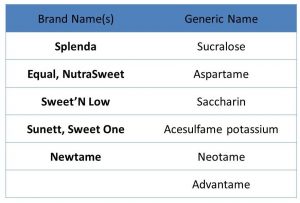
There are six types of artificial sweeteners currently approved by the FDA.

TTwo “natural” sugar substitutes have also been approved by the FDA. Brand names such as Truvia, PureVia, Enliten (Steviol glycosides), Nectresse, Monk Fruit in the Raw, PureLo (monk fruit extract) are all made from plants. But before being sold in the store, they must first be highly processed in a laboratory. So don’t be fooled into thinking that the word “natural” means that it comes straight from nature to your table.

Do Artificial Sweeteners Help You Lose Weight?

It makes sense that eating and drinking fewer calories by switching to sugar substitutes should lead to weight loss. However, there are several studies that found that people who drink diet drinks weigh more than those who don’t.[1] However, that does not mean that the sugar substitutes cause weight gain, since people who are overweight may choose diet drinks in an effort to lose weight.

Researchers are questioning whether these products may actually make it more difficult to lose weight, perhaps because sweet drinks and foods make people crave more sweets.  For example, research published in 2021 found that drinking beverages sweetened with the artificial sweetener sucralose, led women and people with obesity to eat larger amounts of food at their next meal.[11] That would definitely stand in the way of people trying to lose weight.

The best way to study if artificial sweeteners help people lose weight is known as a randomized controlled trial. People in the trial would be randomly put into groups—one group uses artificial sweeteners while the other group uses sugar. Then, the two groups can be compared to see if using artificial sweeteners had a different impact than sugar. However, randomized clinical trials would be very difficult to conduct on artificial sweeteners because they are in so many different types of food, not just diet drinks.

In 2023, the World Health Organization (WHO) scrutinized scientific reviews of the effect of artificial sweeteners on weight control and concluded that artificial sweeteners do not help people lose weight.[2]

Are Artificial Sweeteners Safe?

A 2020 study published in the journal Cell Metabolism by a group of Yale researchers found that the consumption of the common artificial sweetener sucralose (found in Splenda, Zerocal, Sukrana, SucraPlus) in combination with carbohydrates can turn a healthy person into one with high blood sugar.[3]

You may have heard claims that artificial sweeteners could change hormone levels [4], increase the risk of heart problems [5], and cause higher rates of type II diabetes.[6] An important 2022 French study of more than 100,000 adults followed for a median of 9 years found that consuming artificial sweeteners was associated with a very slight increased likelihood of experiencing newly diagnosed cardiovascular conditions such as heart attacks and stroke. The study identified three artificial sweeteners that seem to cause the greatest increases. People taking aspartame (NutraSweet, Equal) were more likely to have a stroke, while people taking acesulfame potassium (Sunnett, Sweet One) or sucralose (Splenda) were more likely to develop coronary artery disease.[7]

The reasons why artificial sweeteners might harm cardiovascular health are unclear. However, experts suggest that these sweeteners could increase inflammation, metabolic disruptions, and alterations in the gut microbiome and blood vessels. That may increase the chances of developing conditions such as type 2 diabetes, unhealthy cholesterol levels, and high blood pressure.

Artificial sweeteners also increase the chances of being depressed, according to a study published in 2023 on 31,712 women aged 40-62. After statistically controlling for other traits such as age, smoking, and BMI, women who consumed larger quantities of artificial sweeteners and artificially sweetened beverages were more likely to be depressed. While the reasons are not fully understood, the use of these artificial sweeteners can lead to changes in the brain that could contribute to the development of depression.[8]

For many years, there were concerns about whether artificial sweeteners cause cancer. A recent study by the WHO’s International Agency for Research on Cancer (IARC) has found a possible link between aspartame and liver cancer. While the risk of cancer from aspartame is considered low for most consumers, those who consume large quantities could be harmed. In addition, children may reach the daily recommended limit more easily due to their lower body weight. In fact, a 44-pound child would only need to drink approximately four cans of Diet Coke per day to exceed the maximum recommended limit. That is why it is so important to be very careful to consume as little aspartame as possible, especially for children, to reduce the chances of developing cancer.[9]

Should You Use Artificial Sweeteners?

Does the increased risks of obesity, diabetes, and heart disease from consuming large amounts of sugary drinks may outweigh the risks posed by artificial sweeteners?  That is still now clear, but based on the research so far, it makes sense to avoid the largest drink sizes, whether sugary or artificially sweetened. There is growing evidence that consuming even small amounts of artificially sweetened beverages may result in similar health risks to sugary drinks, and they apparently do not help with weight loss. Finding healthier alternatives, such as making your own coffee or tea, or flavoring water with slices of lemon, lime, watermelon, or apple, is a good strategy for your health. And, keep in mind that you should never consume more calories in other food because you “saved” some by drinking a non-caloric drink![7]

All NCHR articles are reviewed and approved by Dr. Diana Zuckerman and other senior staff. 

The National Center for Health Research is a nonprofit, nonpartisan research, education and advocacy organization that analyzes and explains the latest medical research and speaks out on policies and programs. We do not accept funding from pharmaceutical companies or medical device manufacturers. Find out how you can support us here.

References

  1. Anderson GH, Foreyt J. Sigman-Grant M, Allison DB, The use of low-calorie sweeteners by adults: impact on weight management. J Nutr. 2012 Jun;142(6):1163S-9S.
  2. The World Health Organization. WHO advises not to use non-sugar sweeteners for weight control in newly released guideline. May 2023. Retrieved from https://www.who.int/news/item/15-05-2023-who-advises-not-to-use-non-sugar-sweeteners-for-weight-control-in-newly-released-guideline
  3. Dalenberg JR, Patel BP, Denis R, Vinke PC, Luquet S, Small DM. Short-Term Consumption of Sucralose with, but Not without, Carbohydrate Impairs Neural and Metabolic Sensitivity to Sugar in Humans. Cell Metabolism. Clinical and Translational Report, Volume 31, Issue 3, P493-502E7. March 03, 2020. https://www.cell.com/cell-metabolism/fulltext/S1550-41312030057-7
  4. Brown RJ, Walter M, Rother KI. Effects of diet soda on gut hormones in youths with diabetes. Diabetes Care. 2012 Mat;35(5):959-64.
  5. Vyas A, Rubenstein L, Robinson J. et al. Diet drink consumption and the risk of cardiovascular events: a report from the Women’s Health Initiative. J Gen Intern Med. 2015 apr;30(4):462-8.
  6. Suez J, Korem T, Zeevi D, et al. Artificial sweeteners induce glucose intolerance by altering the gut microbiota. Nature. 2014 Oct 9;514(75210:181-6.
  7. Corliss, Julie. Sugar substitutes: New cardiovascular concerns? Harvard Medical School. January 1, 2023. https://www.health.harvard.edu/heart-health/sugar-substitutes-new-cardiovascular-concerns
  8. Florko, Nicholas. WHO says aspartame might cause cancer–but that most adult consumers don’t need to worry. STAT. July 13, 2023. https://www.statnews.com/2023/07/13/who-says-aspartame-might-cause-cancer-but-that-most-adult-consumers-dont-need-to-worry
  9. Florko, Nicholas. WHO says aspartame might cause cancer–but that most adult consumers don’t need to worry. STAT. July 13, 2023. https://www.statnews.com/2023/07/13/who-says-aspartame-might-cause-cancer-but-that-most-adult-consumers-dont-need-to-worry
  10. Look for these 9 red flags to identify food that is ultra-processed. (2024, January 2). Washington Post. https://www.washingtonpost.com/wellness/2024/01/02/ultra-processed-foods-identification/
  11. O’Connor, A., Steckelberg, A., & Reiley, L. (n.d.). How fake sugars sneak into foods and disrupt metabolic health. Washington Post. Retrieved January 11, 2024, from https://www.washingtonpost.com/wellness/interactive/2023/sugar-substitutes-health-effects/

Our Public Comment on HHS Draft Framework to Support and Accelerate Smoking Cessation

We appreciate the opportunity to submit public comments to the Department of Health and Human Services (HHS) regarding their Draft HHS 2023 Framework to Support and Accelerate Smoking Cessation.

This is an incredibly important issue and we understand that this framework, and its goals, will guide HHS cessation efforts moving forward. We are a nonprofit think tank that conducts, analyzes, and scrutinizes research on a range of health issues, with particular focus on which prevention strategies and treatments are most effective for which patients and consumers. We do not accept funding from companies that make products that are the subject of our work, so we have no conflicts of interest. Below are recommendations for HHS to consider as the smoking cessation framework is developed.

BACKGROUND INFORMATION

Cigarette smoking is the leading cause of preventable death and illness in the United States. More than 480,000 die annually from smoke-related illnesses and approximately $240 billion was spent on healthcare for smokers in 2018.[1] Safe and effective cessation treatments and techniques are needed to improve the health and longevity of individuals living in the United States. A 2015 study from the Centers for Disease Control and Prevention (CDC) found that 68% of people want to quit smoking, but that desire alone is not enough to maintain a change in the behavior. Research has shown it can take 30 or more tries before a smoker quits successfully.[2],[3] The most common method of quitting for people in the United States is to set a quit deadline and attempt to stop cold turkey on that day. Evidence-based interventions that help assist in quitting have been developed, with some being more successful than others.

It is crucial for HHS to invest in cessation strategies that are safe and effective, including behavioral therapies and nicotine replacement therapies (NRT). Behavioral therapies and nicotine replacement therapies (NRTs) are common, with hundreds of studies looking at which of them are most effective. A 2021 meta-analysis of behavioral therapies found that any form of counseling (e.g., in-person, telephone, self-help, etc.), as well as guaranteed financial incentives, were the most successful forms of therapy.[4] The same study analyzed the economic benefits of behavioral therapies and found that different behavioral therapies were equally cost effective. A 2023 meta-analysis of NRTs looked at 68 studies and found a combination of NRT, such as nicotine gum alongside a nicotine patch, was more effective than using any method individually.[5] The same study also found that higher-dose products are more effective than their lower-dose counterparts and that using NRT prior to quitting smoking can be more effective than starting the NRT after quitting. However, higher-dose products may also have greater risks, and smoking cessation products can have serious psychiatric side effects.[6] Therefore, studies of the efficacy of NRTs compared to each other or to behavioral/counseling treatments need to also consider data on unpleasant or serious side effects.

Some claim that e-cigarettes can be used as a cessation therapy.  This claim has been described as “negligent and misinformed.”[7]  Research in this area needs to be carefully reviewed because despite conflicting findings, there is growing evidence that e-cigarettes are not safe and not effective to aid in smoking cessation.[8],[9] Most of the studies that support e-cigarettes for smoking cessation have flaws making the results questionable (e.g., short term follow up or not randomly assigning participants.) Since vaping is often promoted as a tool to quit smoking, it is essential to have better data to determine whether this is supported by evidence.

ACCESS AND COVERAGE

Increasing access and coverage of cessation treatments is a key step in decreasing the number of deaths related to smoking. A 2018 study examined patients who were offered smoking cessation treatments by their primary care doctor. The results showed fewer than 20% of smokers accepted any type of therapy.[10] This same study found that White patients were more likely to be offered a prescription for a cessation medication whereas Black patients were more likely to be offered cessation counseling. We recommend HHS determine effective strategies to help primary care providers increase patients’ knowledge about effective cessation therapies and willingness to try them. These key providers can give information to patients about how they can stop smoking and what resources are best at helping them to do so. Providing patients with several effective options, will allow them to find which strategy, or perhaps strategies, work best for aiding their smoking cessation.

SURVEILLANCE EXPANSION

Expanding surveillance regarding smoking and cessation behaviors is vital to understand the patterns and trends of the behaviors. Regularly evaluating data from point of sales and compliance with advertising requirements will allow HHS to act on the most up-to-date information and enforce decisions by the court. For example, the FDA banned flavored e-cigarettes after data showed that teenagers used preferred them to traditional tobacco flavors, and that they potentially served as a gateway to nicotine addiction.[11] Similarly, it is important to ensure that advertising restrictions banning the promotion and sales of e-cigarettes aimed at children and teenagers are enforced. We also recommend collecting information about trends in popular cessation therapies such as purchasing trends for NRTs. This will enable HHS to encourage safe and effective cessation methods.

PROMOTING RESEARCH

Promoting well-designed research to support and accelerate smoking cessation will help achieve the Cancer Moonshot’s goal to reduce the cancer death rate by 50% over the next 25 years. Better research is needed comparing the effects of different cessation therapies for different demographic groups.  Across races, people who quit smoking, particularly early in their life, have reduced risk of all-cause mortality.[12] However, there is not enough research on the most effective cessation therapies for specific populations. A small study conducted by researchers at the University of Miami found there were greater decreases in perceived stress for African Americans and Hispanics after receiving behavioral therapy for smoking cessation, but the study did not look at the effectiveness of other cessation therapies.[13]


[1] Centers for Disease Control and Prevention. (2022, July 28). Costs and expenditures. Centers for Disease Control and Prevention. https://www.cdc.gov/tobacco/data_statistics/fact_sheets/fast_facts/cost-and-expenditures.html

[2] Babb, S., Malarcher, A., Schauer, G., Asman, K., & Jamal, A. (2017). Quitting Smoking Among Adults – United States, 2000-2015. MMWR. Morbidity and mortality weekly report65(52), 1457–1464. https://doi.org/10.15585/mmwr.mm6552a1

[3] Chaiton, M., Diemert, L., Cohen, J. E… & Schwartz, R. (2016). Estimating the number of quit attempts it takes to quit smoking successfully in a longitudinal cohort of smokers. BMJ open6(6), e011045. https://doi.org/10.1136/bmjopen-2016-011045

[4] Hartmann-Boyce, J., Livingstone-Banks, J., Ordóñez-Mena, J. M… & Aveyard, P. (2021). Behavioural interventions for smoking cessation: an overview and network meta-analysis. The Cochrane database of systematic reviews1, CD013229. https://doi.org/10.1002/14651858.CD013229.pub2

[5] Theodoulou, A., Chepkin, S. C., Ye, W… & Lindson, N. (2023). Different doses, durations and modes of delivery of nicotine replacement therapy for smoking cessation. The Cochrane database of systematic reviews6(6), CD013308. https://doi.org/10.1002/14651858.CD013308.pub2

[6] Campbell, A. R., & Anderson, K. D. (2010). Mental health stability in veterans with posttraumatic stress disorder receiving varenicline. American journal of health-system pharmacy : AJHP : official journal of the American Society of Health-System Pharmacists67(21), 1832–1837. https://doi.org/10.2146/ajhp100196

[7] McAlinden, K. D., Eapen, M. S., Lu, W., Sharma, P., & Sohal, S. S. (2020). The rise of electronic nicotine delivery systems and the emergence of electronic-cigarette-driven disease. American journal of physiology. Lung cellular and molecular physiology319(4), L585–L595. https://doi.org/10.1152/ajplung.00160.2020

[8] Laucks, P., & Salzman, G. A. (2020). The Dangers of Vaping. Missouri medicine117(2), 159–164.

[9] Venkata, A. N., Palagiri, R. D. R., & Vaithilingam, S. (2021). Vaping epidemic in US teens: problem and solutions. Current opinion in pulmonary medicine27(2), 88–94. https://doi.org/10.1097/MCP.0000000000000757

[10] Hooks-Anderson, D. R., Salas, J., Secrest, S., Skiöld-Hanlin, S., & Scherrer, J. F. (2018). Association between race and receipt of counselling or medication for smoking cessation in primary care. Family practice35(2), 160–165. https://doi.org/10.1093/fampra/cmx099

[11] Leventhal, A. M., Goldenson, N. I., Cho, J., Kirkpatrick, M. G., McConnell, R. S., Stone, M. D., Pang, R. D., Audrain-McGovern, J., & Barrington-Trimis, J. L. (2019). Flavored E-cigarette Use and Progression of Vaping in Adolescents. Pediatrics144(5), e20190789. https://doi.org/10.1542/peds.2019-0789

[12] Thomson, B., Emberson, J., Lacey, B… & Islami, F. (2022). Association Between Smoking, Smoking Cessation, and Mortality by Race, Ethnicity, and Sex Among US Adults. JAMA network open5(10), e2231480. https://doi.org/10.1001/jamanetworkopen.2022.31480

[13] Webb Hooper, M., & Kolar, S. K. (2015). Distress, race/ethnicity and smoking cessation in treatment-seekers: implications for disparity elimination. Addiction (Abingdon, England)110(9), 1495–1504. https://doi.org/10.1111/add.12990

Fast Food Calorie Count Cheat Sheet

Andrea Sun, Avery Nork, Jenny Niwa

Fast Food Facts (download pdf)

Let’s face it:  With so much to do, it’s hard to eat right. And even though you know that fast food tends to be more fattening and less healthy, fast food chains are convenient and avoiding them may not be the most realistic. However, obesity is linked to a wide range of health problems, including breast cancer, endometrial cancer, colon cancer, and liver cancer, and knowing your healthiest options can go a long way for your overall health.

There is good news. The FDA implemented the new menu labeling rule in 2018 after facing delays and challenges since it was finalized in December 2014.[1]

As a result, chain restaurants with 2 or more locations under the same name have to provide accurate information about calories and other nutritional information. Many changed their ingredients or made portions smaller to reduce calories. Customers can now consume fewer calories without dramatically changing their eating habits.[2] Consumers now are empowered to make more informed choices about their food and it is easier to choose healthier eating habits.

How Many Calories Should I be Consuming a Day?

The United States Department of Agriculture (USDA) has recommended dietary guidelines that include the number of calories you should consume a day, depending on your age, level of activity, and whether you are a man or woman.[3] The chart below will help you find out how many calories you should be getting.[3] If you regularly consume more than the recommended amount, you will probably gain weight.

Recommended Daily Calorie Intake by Gender and Age Based on Activity Level

Activity Level
Gender Age (years) Sedentary Moderately Active Active
Female Child


2-3


1,000


1,000-1,200


1,000-1,400


Male Child 2-3 1,000 1,000-1,400 1,000-1,400


Females 4-8

9-13

14-18

19-25

26-30

31-50

51+

1,200-1,400

1,400-1,600

1,800

2,000

1,800

1,800

1,600

1,400-1,600

1,600-2,000

2,000

2,200

2,000

2,000

1,800

1,400-1,800

1,800-2,200

2,400

2,400

2,400

2,200

2,200


Males 4-8

9-13

14-18

19-20

21-25

26-30

31-35

36-40

41-45

46-50

51-55

56-60


1,200-1,400

1,600-2,000

2,000-2,400

2,600

2,400

2,400

2,400

2,400

2,200

2,200

2,200

2,200


1,400-1,600

1,800-2,200

2,400-2,800

2,800

2,800

2,600

2,600

2,600

2,600

2,400

2,400

2,400


1,600-2,000

2,000-2,600

2,800-3,200

3,000

3,000

3,000

3,000

2,800

2,800

2,800

2,800

2,600


Source: HHS/USDA Dietary Guidelines for Americans, 2005 [3]

Sedentary means a lifestyle that includes only the light physical activity associated with typical day-to-day life. Moderately active means physical activity equal to walking about 1.5 to 3 miles per day at 3 to 4 miles per hour, in addition to the light physical activity typical of day-to-day life. Active means physical activity equal to walking more than 3 miles per day at 3 to 4 miles per hour, in addition to the light physical activity typical of day-to-day life. The calorie ranges are different for different age groups. For children and adolescents, more calories are needed at older ages. For adults, fewer calories are needed at older ages. [3] The National Center for Health Research wants to give you examples of menu choices offered by some of the most popular fast food chains. Take a look — you may be surprised!

Fast Foods by Category:

Pizza per slice: Calories
California Pizza Kitchen Original BBQ Chicken 190
Domino’s Medium Ultimate Deep Dish EXtravaganZZa Feast 350
Domino’s Medium Cheese 190
Domino’s Medium Cheese and Pepperoni 220
Papa John’s Medium Garden Fresh on Original Crust 200
Papa John’s Medium Spinach & Tomato Alfredo on Original Crust 200
Pizza Hut’s Medium Thin n’ Crispy, Pepperoni 200
Pizza Hut’s Medium Original Pan Meat Lover’s Pizza 310
Pizza Hut’s Medium Original Pan Hawaiin Chicken Pizza 240

Cheeseburges and Hamburgers Calories
Burger King Whopper (with cheese) 790
Five Guys (with cheese) 980
McDonald’s Quarter Pounder (with cheese) 520
Wendy’s ¼ Pound Single burger (with Cheese) 610
Hamburgers without cheese are ~100-150 calories less

Chicken: Calories
Burger King 8 Piece Chicken Nuggets 390
Burger King Original Chicken Sandwich 680
McDonalds McNuggets (10 piece) 410
McDonald’s McChicken 400
Wendy’s 10 Piece Chicken Nuggets 491
Wendy’s Spicy Chicken Sandwich 500
Popeyes Chicken Sandwich 700
Kentucky Fried Chicken Original Recipe Chicken Breast 390

French Fries: Calories
Burger King Medium Fries 387
Five Guys, Regular 953
McDonald’s Medium Fries 320
Wendy’s Medium Fries 427

Burritos: Calories
Baja Burrito with Chicken 988
Chipotle Chicken Burrito (with rice, black beans, pico, sour cream, and cheese) 1115
Taco Bell Beefy 5-layer Burrito 490
Taco Bell Grilled Cheese Burrito, Ground Beef 720

Sandwiches: Calories
Panera Smoky Buffalo Chicken Melt – Toasted Baguette 830
Panera Roasted Turkey & Avocado BLT (whole) 860
Quiznos Honey Mustard Chicken Sub, 8” 830
Quiznos Tuna Melt, 8” 660
Subway Turkey, 6 inch (no mayo no cheese) 280
Subway Sweet Onion Chicken Teriyaki, 6 inch (no mayo no cheese) 330

Salads (no dressing): Calories
McDonald’s Bacon Ranch Grilled Chicken Salad 440
Panera Greek Salad 400
Panera Strawberry and Poppyseed Chicken Salad 350
Quiznos Honey Mustard Chicken, Full 550
Subway Oven Roasted Chicken salad with MVP parmesan vinaigrette dressing 200
Wendy’s Apple Pecan Salad 450

Muffins: Calories Sugar
Au Bon Pain Cranberry Walnut 520 29 g
Dunkin Donuts Blueberry 460 44 g
Dunkin Donuts Honey Bran Raisin 440 39 g
Starbuck’s Blueberry 424 36 g
Starbuck’s Skinny Blueberry 264 29 g

Donuts: Calories Sugar
Dunkin Donuts Glazed Donut 260 12 g
Krispy Kreme Original Glazed Donut 190 10 g
Starbuck’s Old-fashioned Glazed Donut 480 30 g

Bagels: Calories
Dunkin Donuts Everything 350
Einstein’s Asiago Cheese Bagel 300
Einstein Everything 280
Starbuck’s Plain 280

Other Breakfast options: Calories
Burger King Sausage, Egg, and Cheese Biscuit 526
Dunkin Donuts Egg and Cheese Bagel 460
McDonald’s Sausage McMuffin with Egg 480
Taco Bell’s Breakfast Crunchwrap with Sausage 730
Starbuck’s Cheese Danish 290
Starbuck’s Banana Walnut & Pecan Loaf 410

Coffee: Calories Sugar
Dunkin Donuts Mocha Swirl Latte (10 oz) 220 32 g
Dunkin Donuts Coolatta with Skim Milk (16 oz) 140 29 g
Dunkin Donuts Latte (10oz) 120 9 g
Dunkin Donuts Coffee (14oz), (no milk or sugar) 10 0 g
Starbuck’s Caramel Frappuccino, Grande Nonfat with Whip 390 66 g
Starbuck’s Caffè Mocha, Grande Nonfat Milk, no Whip 250 34 g
Starbuck’s Caffè Latte, Grande 2% Milk 190 17 g
Starbuck’s Coffee Frappuccino Light 110 23 g
Starbuck’s Caramel Macchiato, Grande 250 33 g

Where to Find This Information?

Don’t fall for the “health halo” effect by assuming that all foods at restaurants marketed as “healthy” or salads and other foods you assume are healthy are actually better for you. Several fast food chains and restaurants have their nutrition information on their websites. If your favorite foods are not listed above, go to the chain’s website and look for the calorie information. You may be shocked…or pleasantly surprised! Remember: knowledge is power. Knowing how many calories are in your favorite snack or meal-on-the-go can help you watch your weight and stay healthy.

All articles are reviewed and approved by Dr. Diana Zuckerman and other senior staff.

References:

1. Federal Register. Food Labeling; Nutrition Labeling of Standard Menu Items in Restaurants and Similar Retail Food Establishments. National Archives. 2014. Access from https://www.federalregister.gov/documents/2014/12/01/2014-27833/food-labeling-nutrition-labeling-of-standard-menu-items-in-restaurants-and-similar-retail-food

2. Evich, Helena. Obama’s calorie rule kicks in thanks to Trump. Politico. 2018. Access from https://www.politico.com/story/2018/05/07/fdacalories-food-labels-obama-trump-517191

3. U.S. Department of Agriculture. Dietary Guidelines for Americans 2020-2025. Access from https://www.dietaryguidelines.gov/sites/default/files/2020-12/Dietary_Guidelines_for_Americans_2020-2025.pdf